Product FAQ's
1.What materials are commonly used for manufacturing Ball End Mills?
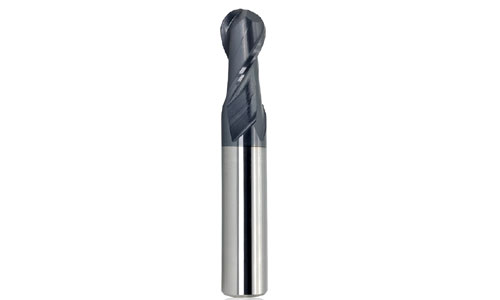
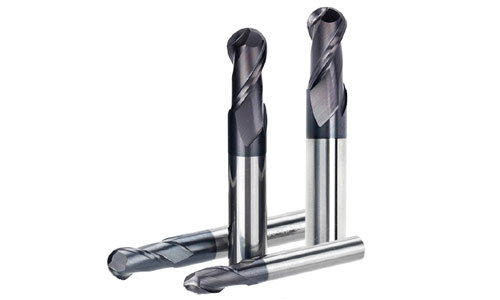
Ball End Mills are made from durable, high-quality materials designed to handle tough cutting tasks. They are built to maintain hardness and wear resistance even under demanding conditions, ensuring long tool life and consistent performance. The choice of tool depends on the speed of machining, the type of material being worked on, and how long the tool needs to last.
2.Where are Ball End Mills commonly used in industrial applications?
Ball End Mills are widely used in mold making, aerospace components, automotive dies, and medical parts. They are ideal for 3D shaping, creating slots, and finishing surfaces. These tools are trusted in CNC machines and other precision equipment for handling complex shapes and detailed work.
3.Can Ball End Mills be customized for specific machining needs?
Dedicated Impex provides customization in diameter, flute length, shank size, and coating options. Special geometries can be developed for specific materials or cutting conditions. OEM branding and special packaging can also be offered. Custom tools help improve productivity and machining accuracy.
4.Do Ball End Mills meet international export standards and compliance?
Dedicated Impex Co. manufactures Ball End Mills following international quality and export standards. Each tool undergoes dimensional and performance inspection before dispatch. Export packaging ensures protection against corrosion and transit damage. Required documentation is provided for smooth global trade compliance.
5. Can a ball end mill be used for both roughing and finishing?
Yes, ball end mills can be used for both roughing and finishing operations, allowing them to remove large amounts of material efficiently during roughing while also creating smooth, precise contours and detailed surfaces during finishing, as long as the tool size and machining strategy are carefully selected.
6. Are Ball End Mills available in standard sizes?
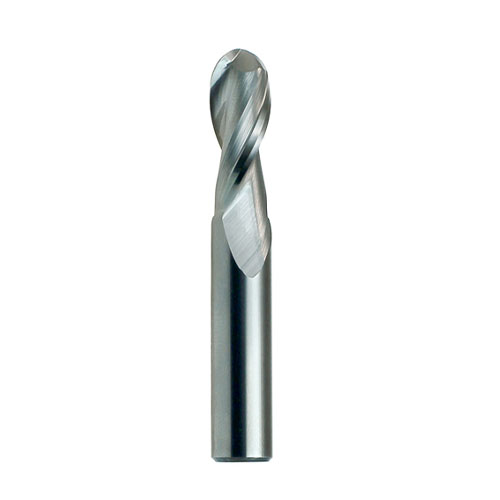
Yes, Ball End Mills are available in a wide range of standard diameters and lengths. This ensures compatibility with common CNC and conventional milling machines. Standard sizing allows easy replacement and inventory management. Custom sizes can also be supplied on request.
7.How do I select the right Ball End Mill?
Choosing the right ball end mill depends on the shape and complexity of the surface, the level of finish required, and the tool size and length, which should be suitable for both the workpiece and the machine’s capabilities to ensure accurate and efficient machining.
8. Are Ball End Mills suitable for high-speed and high-feed machining?
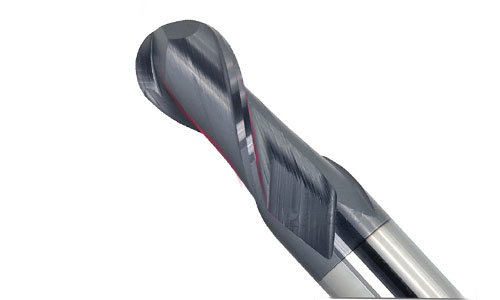
Modern Ball End Mills are engineered for high-speed CNC machining environments. Optimized geometries ensure smooth cutting at elevated spindle speeds. Strong core design supports higher feed rates without breakage. This improves productivity and cycle time efficiency.
9.What size ranges are typically available for industrial Ball End Mills?
Ball End Mills are available in a wide range of metric and inch sizes. Standard diameters suit most machining requirements. Extended length and long-reach options support deep cavity machining. Size selection depends on component design and machining accessibility.
10.Do you provide OEM manufacturing services for Ball End Mills?
DIC Tools offers OEM manufacturing services for Ball End Mills for global distributors and private-label brands. Tools can be produced as per customer drawings, specifications, and application requirements. Options include customized geometry, material grades, coatings, and branding. This OEM support helps partners deliver reliable and market-ready cutting tools.